
Product Overview
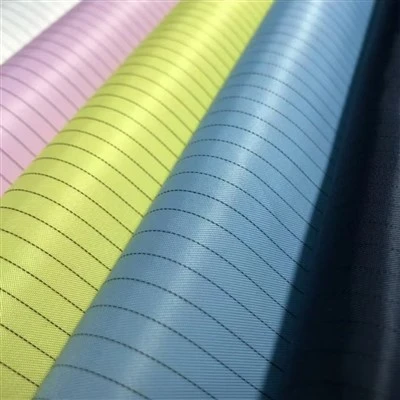
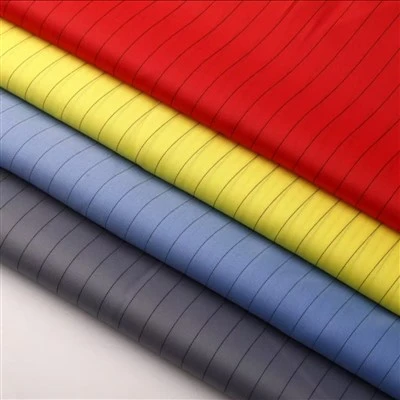
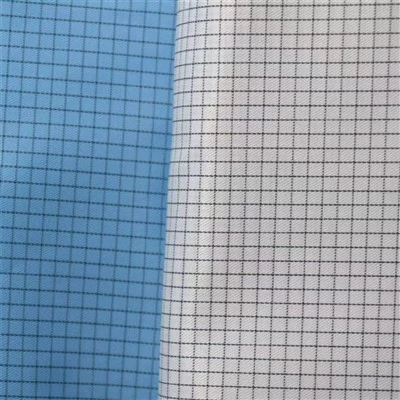
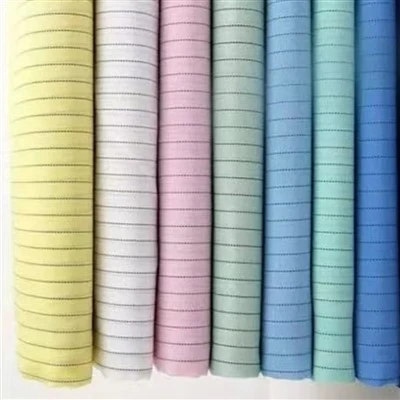
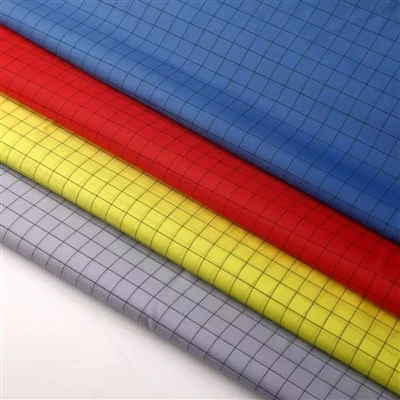
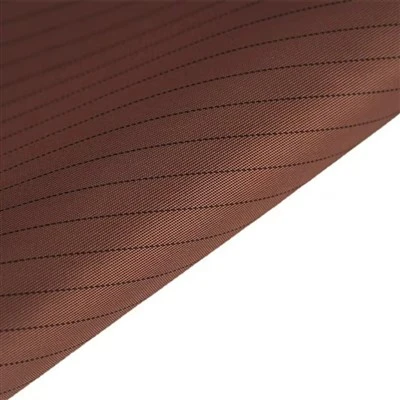
Anti Static Textile covers woven, knitted and non-woven conductive constructions rather than one fixed fabric type. Conductivity can come from carbon coating, metal-plated yarn or integrated carbon fiber; representative woven and knitted versions weigh about 120 g/m² and 150 g/m². Applications include ESD gloves, wrist-contact products, packaging cloth, protective covers and other industrial textile components where stretch, hand, strength and resistance requirements differ from standard anti-static workwear.
Key Data Table
|
Property |
Value |
|
Options |
Woven (120 g/m²), Knit (150 g/m²) |
|
Conductive Methods |
Carbon coating, metal plated yarn, carbon fiber |
|
Surface Resistance (IEC 61340-2-3) |
10⁵ to 10⁹ ohms |
|
Static Voltage |
<200 volts |
|
Static Decay (1000V to 100V) |
<0.2 seconds (FTMS 101C 4046) |
|
Woven Tensile Strength |
>600N |
|
Knit Wash Resistance (20 washes) |
Resistance increase <1 order |
|
Knit Softness |
Skin contact friendly |
Core Advantages
Configurable Conductive Performance
Carbon coating, metal-plated yarn and woven carbon fiber provide different resistance ranges and durability profiles. This allows packaging cloth, work-area accessories and handling products to use the conductive method that fits the application, whether the requirement is closer to grounding or static dissipation.
Mechanical Strength for Industrial Textile Parts
The woven version has tensile strength above 600 N. For pouches, covers and packaging cloth that are pulled around components or handled repeatedly, the woven base provides the mechanical support while the conductive element remains part of the textile.
Fast Static Charge Decay
Static decay is listed below 0.2 second from 1,000 V to 100 V. In handling areas around charge-sensitive parts, this shortens the time that an elevated surface charge remains on the textile after movement or contact.
Customization Capability

Textile Construction
Woven, knitted and non-woven formats are available, with representative weights around 120-150 g/m². The structure can be adjusted for rigid packaging parts, flexible gloves or softer contact products.
Conductive Method
The conductive system can use carbon coating, metal-plated yarn or carbon-fiber integration. Selection depends on the target resistance as well as expected laundering and abrasion exposure.
Electrical Target
Electrical targets can be set within approximately 10⁵-10⁹ Ω. Conductive content and spacing are adjusted to the resistance requirement approved for the project.
Quality Control
- Inspection follows the way each conductive system can fail. Coated textiles are checked for coating continuity; metal or carbon-yarn fabrics are checked for yarn continuity and spacing; woven and knitted constructions are also screened for structural defects.
- Electrical results are checked together with the physical test that matters for the selected construction, such as tensile strength for woven material or wash-retention for knitted versions. This keeps the release decision tied to the actual textile being supplied.
- Finished rolls or cut textile pieces are inspected before packing. Third-party inspection can be arranged when it is part of the order requirement.
FAQ
Q: Can I get a sample before production?
A: Samples can be provided for material and resistance evaluation.
Q: What is the MOQ?
A: The current product MOQ is 500 meters.
Q: Does a coated anti-static textile last the same as woven conductive yarn?
A: No. Interwoven conductive yarn is the better choice for repeated laundering or abrasion; coating is better suited to lighter-duty use.
Q: Can the textile be connected to ground?
A: Lower-resistance conductive versions can be built into grounded products, but the final grounding hardware and contact path must be validated.
Hot Tags: anti static textile, China anti static textile manufacturers, suppliers, factory, Anti Static Clothing Material, anti static fabric, Anti Static Lining Fabric, Anti Static Textile, Antistatic ESD Fabrics, ESD Safe Fabric